Introduction
The solar industry is on the brink of a significant transformation, driven by remarkable advancements in high-efficiency solar panel technologies. As we push towards a sustainable energy future, these innovations not only enhance the efficiency of solar panels but also make solar energy more accessible and cost-effective. This article explores the latest developments in high-efficiency solar technologies, examining the potential of these innovations to revolutionize the solar energy landscape.
The Evolution of Solar Panel Efficiency
Silicon Solar Cells: The Industry Standard
Silicon solar cells have been the backbone of the solar industry for decades, consistently improving in efficiency and cost-effectiveness. Today, the best silicon-based solar panels boast efficiencies of over 22%, a significant improvement from earlier models. These gains have been achieved through incremental improvements in cell design, including passivated emitter rear cells (PERC), bifacial designs, and multi-busbar technology, which reduce resistive losses and increase light capture.
Perovskite Tandem Solar Cells: A New Frontier
One of the most exciting developments in high-efficiency solar panel technologies is the rise of perovskite tandem solar cells. These cells combine traditional silicon with a layer of perovskite, a material that absorbs light in different parts of the solar spectrum. This tandem approach allows the cells to achieve efficiencies above 30%, surpassing the theoretical limits of silicon alone.
Perovskite solar cells are also gaining attention for their potential to be manufactured at lower costs compared to silicon, further enhancing their appeal. However, challenges remain, particularly in terms of long-term stability and degradation, which researchers are actively addressing.
Bifacial Solar Panels: Harnessing Reflected Light
Bifacial solar panels are another significant advancement, capable of capturing light from both sides of the panel. This design increases energy yield by up to 27% compared to traditional monofacial panels, especially in installations where light can reflect off surfaces such as rooftops or ground coverings. The adoption of bifacial technology is growing, driven by its ability to deliver higher energy outputs in a variety of environmental conditions.
Organic Photovoltaics (OPV): Flexible and Eco-Friendly
Organic photovoltaics (OPV) represent a more sustainable and flexible alternative to traditional solar cells. These cells use organic molecules to capture sunlight, offering the potential for lightweight, flexible solar panels that can be integrated into a variety of surfaces, including windows and fabrics. Although OPV cells currently have lower efficiencies (around 12-15%) compared to silicon-based cells, their potential for low-cost, large-scale production makes them an exciting area of research.
Building-Integrated Photovoltaics (BIPV): Merging Aesthetics with Function
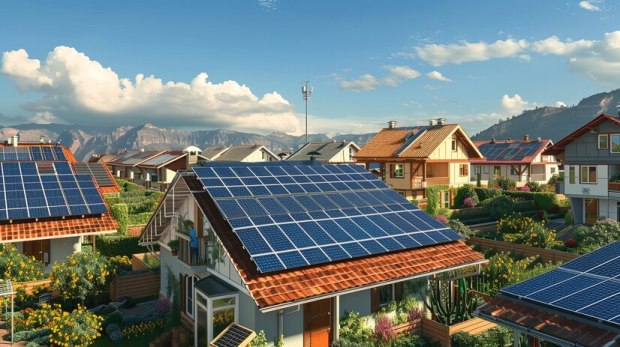
Building-Integrated Photovoltaics (BIPV) are transforming the way solar technology is integrated into the urban environment. BIPV systems incorporate solar cells directly into building materials such as roofs, facades, and windows, allowing buildings to generate energy while maintaining aesthetic appeal. This approach not only reduces the need for separate solar installations but also contributes to energy-efficient building designs.
Overcoming Challenges in Solar Panel Efficiency
Addressing Degradation and Longevity
One of the main challenges in high-efficiency solar panel technologies is ensuring long-term stability and minimizing degradation. Traditional silicon panels typically lose about 1% of their efficiency per year, but perovskite cells, despite their higher initial efficiency, degrade faster under environmental conditions.
To combat this, researchers are developing new materials and manufacturing processes that enhance the durability of these advanced cells. For example, the incorporation of additives such as dimethylammonium formate (DMAFo) in perovskite cells has been shown to significantly improve their stability.
Real-World Efficiency Factors
In real-world conditions, solar panel efficiency is influenced by several external factors including temperature, shading, panel orientation, and solar irradiance. High-efficiency panels are designed to mitigate these factors, but their performance can still vary depending on the installation environment. Innovations such as smart inverters and energy management systems are helping to optimize the performance of solar installations by providing real-time monitoring and control.
Cost and Scalability
While high-efficiency solar panels offer significant benefits, their higher initial costs can be a barrier to widespread adoption. However, as manufacturing processes improve and economies of scale are realized, the cost of these advanced panels is expected to decrease. Moreover, the long-term energy savings provided by higher efficiency can offset the initial investment, making these technologies increasingly attractive for both residential and commercial applications.
The Future of High-Efficiency Solar Panel Technologies
Innovations on the Horizon
The future of high-efficiency solar panel technologies looks promising, with several innovative approaches on the horizon. For instance, the development of tandem solar cells that combine multiple layers of different materials could push efficiencies beyond 35%, setting new benchmarks for solar energy conversion.
Additionally, advancements in solar recycling technologies are making it easier and more cost-effective to recover valuable materials from old solar panels, contributing to the sustainability of the solar industry.
Integration with Other Renewable Technologies
High-efficiency solar panels are also being integrated with other renewable technologies, such as energy storage systems and electric vehicles. For example, solar panels on electric vehicles can extend their range by providing additional power from sunlight, while solar-powered storage systems can ensure a steady supply of energy even when the sun isn’t shining.
The Role of Policy and Incentives
Government policies and incentives play a crucial role in driving the adoption of high-efficiency solar technologies. Initiatives such as investment tax credits (ITCs) and renewable energy mandates encourage both consumers and businesses to invest in solar energy. As these policies evolve to support emerging technologies, we can expect to see even greater adoption of high-efficiency solar panels.
Conclusion
High-efficiency solar panel technologies are at the forefront of the renewable energy revolution, offering significant improvements in energy conversion, cost-effectiveness, and sustainability. As research continues and new innovations emerge, these technologies will play a critical role in shaping the future of solar energy, making it more accessible and effective in our global effort to combat climate change.